
Overview:
Deported DJ, 31-year-old Duckenson Calixte—often known as DJ Fortunate—talks concerning the psychological, monetary and social struggles of rebuilding his life again in Haiti. Calixte, whose profession was well-built in Atlanta, Georgia, was deported 9 months in the past to a rustic he left at age 16.
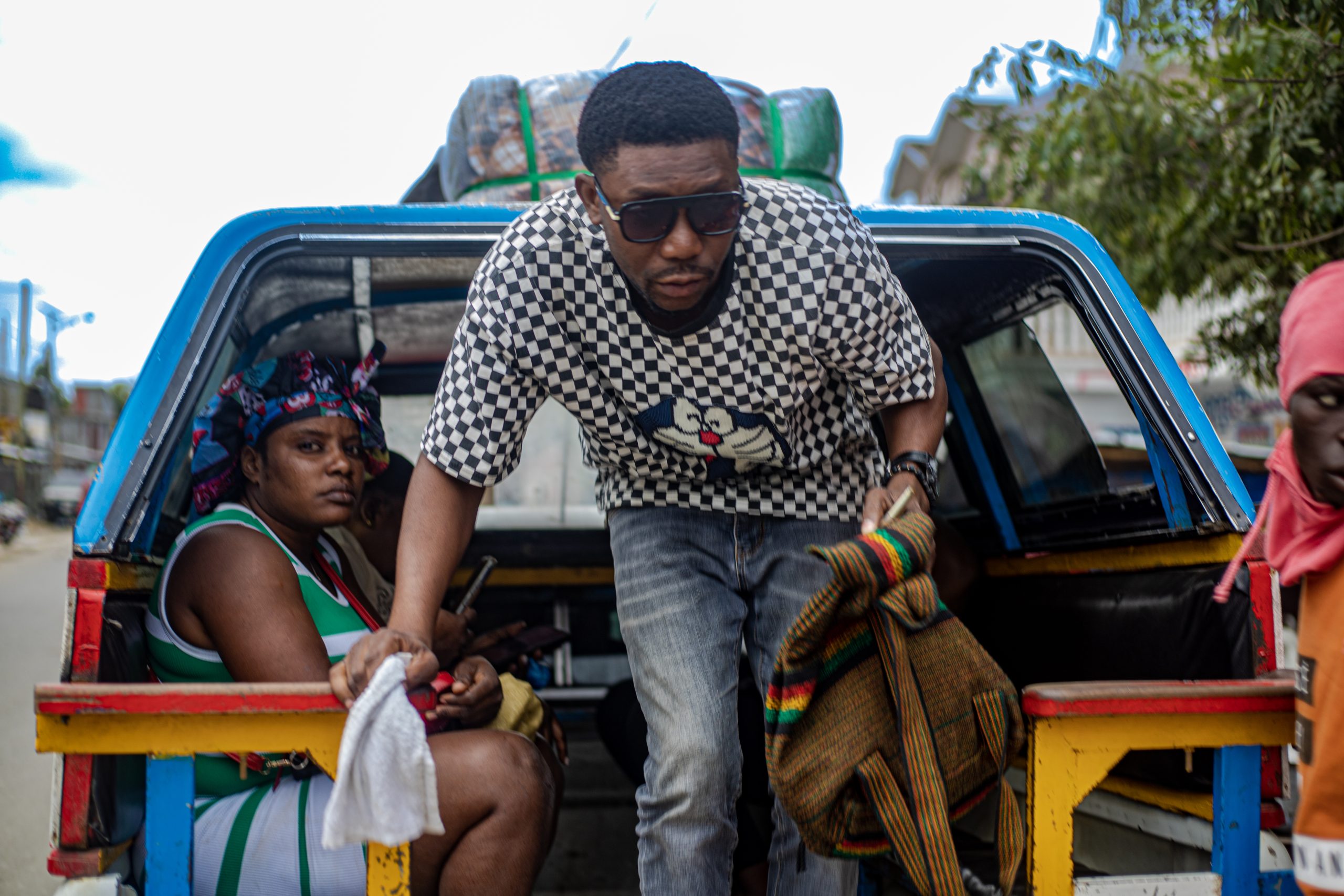
LIMONADE, Haiti — Duckenson “DJ Fortunate” Calixte as soon as lived a fast-paced life in Atlanta, DJ-ing occasions, driving luxurious vehicles and even shifting by way of the town with a personal chauffeur at occasions. As of late, the 31-year-old finds himself navigating crowded tap-taps in site visitors jams and the day by day constraints of life within the north of Haiti — after being deported 9 months in the past.
“Machin nan pa avanse menm non,” Calixte muttered on a journey in early February, caught in site visitors in Cap-Haïtien. Which means in English, ‘the automotive isn’t shifting in any respect.’
His accent marked him as somebody who spent years away or isn’t from northern Haiti.
Initially from Croix-des-Bouquets close to the Port-au-Prince, Calixte lived in the US for 15 years after leaving Haiti at 16. He was deported in June 2025 following a home dispute that led to his arrest and subsequent detention by U.S. Immigration and Customs Enforcement (ICE).
He can not return to his hometown, now largely managed by armed teams, together with the 400 Mawozo gang. As an alternative, he lives in Limonade—about 33 miles south of Cap-Haïtien, the capital metropolis of the Northern Division—attempting to rebuild in a rustic that feels unfamiliar.
Calixte moved to Atlanta after the January 2010 earthquake, in search of asylum with different members of the family. Generally known as a “go-getter,” Calixte labored onerous to adapt to American life, ultimately turning into one in every of Atlanta’s high Haitian American DJs below the identify DJ Fortunate. He additionally hosted Rapday, a music present, on Radio Tambou for seven years.
He’s married and has 4 kids together with his spouse within the U.S.
Calixte stated that in December 2024, a person known as the police, who arrested him as a result of he was having an argument together with his spouse. The DJ was launched from jail quickly after, however ICE later detained him.
“I had some issues with my papers, that’s why ICE confirmed up,” Calixte stated. He declined to say what sort of points he had together with his immigration papers on the time.
The Haitian DJ spent months in detention facilities throughout the U.S. earlier than being deported, describing tensions and violence amongst detainees. He stated he skilled gang violence at an ICE middle in California, claiming that Hispanic gang members focused Black immigrants.
He defined that at that detention middle, Black detainees have to stay collectively to outlive. “I used to be with some associates from Jamaica, Africa, like from Nigeria and Congo,” DJ Fortunate stated.
“Generally you possibly can simply be strolling round and so they suppose you’re a gang member… I’m Haitian, you already know, they’re pondering I’m a Zoe and every part,” he stated. “We needed to be united to outlive.”
Beginning over in nation he barely acknowledges
For a lot of deportees like Calixte, returning to Haiti after years overseas — particularly those that left as youngsters or earlier — means beginning over socially, professionally and culturally.
“The transition is greater than worrying. Mentally, it’s taking rather a lot out of me.”
Duckenson ‘DJ Fortunate’ Calixte
He doesn’t prepare dinner as a result of he by no means realized to make use of charcoal stoves. He depends financially on family within the U.S. and has postponed private relationships whereas struggling to search out secure work.
“For those who don’t settle for modifications, you’re not able to reside,” Calixte stated. “I needed to let go of the luxurious life I had within the U.S. That is actuality now.”
His expertise displays a broader sample. Since President Donald Trump returned to workplace in January 2025, deportations have intensified as a part of a wider effort to cut back the variety of immigrants within the U.S. Not less than 550 Haitians have been returned throughout the previous 12 months.
Upon arrival, deportees usually obtain minimal help — typically only a meal and a small stipend — with no structured reintegration help. Many wrestle to search out housing, employment or psychological help, notably as gang violence prevents them from returning to their authentic communities.
Deportees raised or lengthy settled overseas typically discover the transition particularly jarring. Many must settle in components of the nation aside from their authentic house, face language obstacles, lack native networks and are unfamiliar with Haiti’s day by day socio-economic challenges.
Now dwelling with family, Calixte is slowly attempting to restart his DJ profession. He has secured a number of gigs in northern cities, together with Limonade and Fort-Liberté, however lacks the connections that when fueled his success in Atlanta.
Makes an attempt to return to radio have additionally confirmed troublesome. One station in Cap-Haïtien requested him to pay 10,000 gourdes, about $76, per hour for airtime — a value he can not afford.
“It’s a missed alternative. The way in which he was performing right here [in the U.S.] he might’ve been large,” stated Tanis Tamar, a South Florida-based entrepreneur who has identified Calixte for years. “He’s nonetheless younger, I can’t say he misplaced his probability but it surely’s very troublesome for him now.”
Household separation and uncertainty
Past monetary hardship, Calixte says the emotional toll of deportation is troublesome as effectively — notably being separated from his household.
“Haiti isn’t someplace I’m attempting to be so I’m not bringing my kids,” he stated. “It’s not protected in any respect.”
As he continues to regulate, Calixte describes his scenario as a pressured reset.
“The transition is greater than worrying,” he stated. “Mentally, it’s taking rather a lot out of me.”