
Overview:
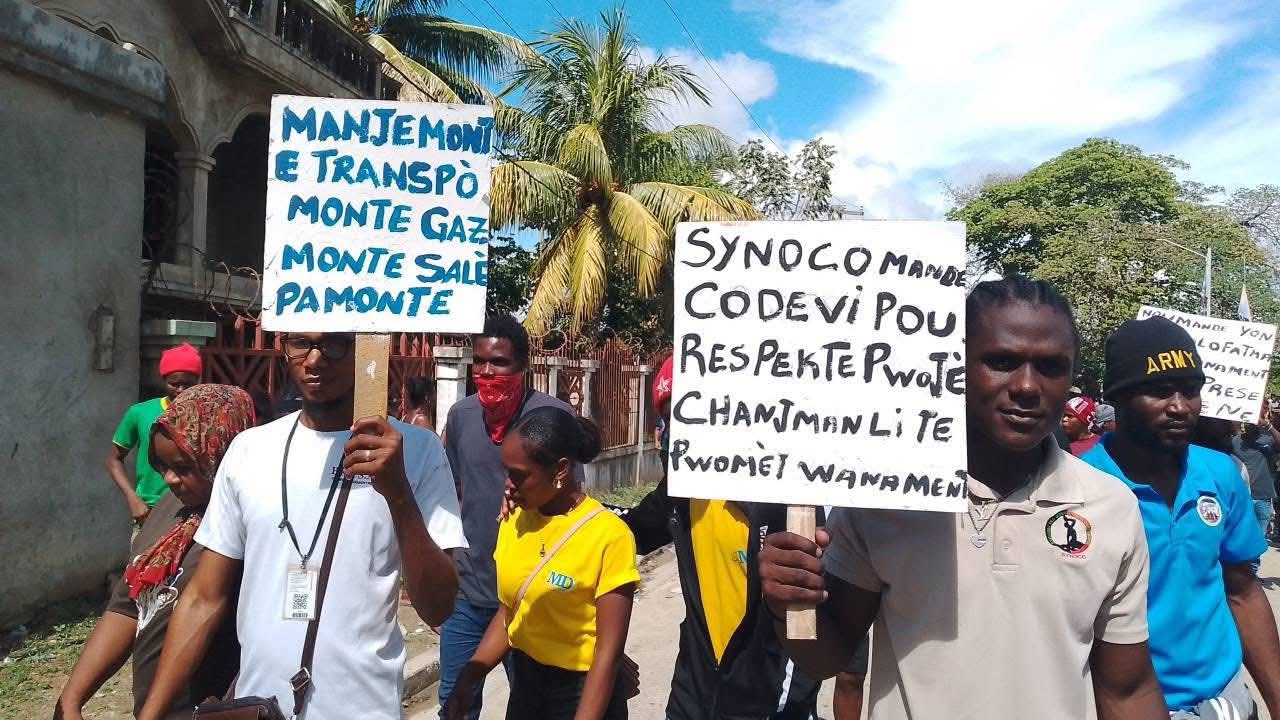
Haiti’s textile employees have rejected a 1,000-gourde ($7.70) wage and proceed their months-long strike, demanding 3,000 gourdes (about $23) per day. Placing employees at CODEVI Industrial Park, a free zone on the northeast border with the Dominican Republic, name the federal government’s announcement of a $2.40 day by day pay increase a “slap within the face.” Many have determined to maintain the protest, which started in April, going as negotiations proceed to fail.
OUANAMINTHE, Haiti — Textile employees in northeast Haiti have rejected the federal government’s newly supplied minimal wage, saying it doesn’t mirror the rising value of residing and vowing to proceed their strike.
The Could 4 minimal wage improve introduced by Minister of Financial system and Finance Gabriel Colin has did not ease tensions on the CODEVI industrial park — a duty-free zone on the border with the Dominican Republic — the place hundreds of employees have mobilized since April. Employees who produce attire, T-shirts and knit items for export, primarily to the USA, are demanding a day by day wage of three,000 gourdes, or roughly $23. They argue the federal government’s improve — which added about $2.40 to the pre-strike day by day wage, elevating it to $7.70 — not meets primary wants.
“One thousand gourdes [$7.70] is nothing in comparison with the price of residing. We’re demanding 3,000 gourdes [$23] after 10 years with out a significant pay improve,” stated Denise Joseph, a employee on the Group M2 manufacturing unit.
“We work arduous day-after-day, however our wages not enable us to dwell with dignity,” added Phara Louis, a mom of two.
The textile sector stays considered one of Haiti’s final main formal industries and among the many nation’s largest private-sector employers. The attire trade generates tons of of thousands and thousands of {dollars} yearly in exports, primarily to the USA, and helps tens of hundreds of jobs instantly and not directly.
A lot of the sector’s survival is determined by U.S. commerce choice applications referred to as HOPE and HELP, which permit qualifying Haitian textile and attire merchandise to enter the U.S. market duty-free. The applications have been just lately prolonged via the tip of 2026 after briefly lapsing in late 2025, a disruption that created uncertainty for producers and buyers.
Based on U.S. trade data and industry groups, Haiti’s garment exports to the U.S. generated roughly $844 million in 2023, accounting for the overwhelming majority of the nation’s exports.
But, regardless of the extension of the commerce choice applications, boosting buyers’ confidence, trade advocates warn that Haiti’s attire sector may collapse underneath struggles over minimal wage improve, mounting insecurity and transportation prices.
Mackenley Jean-Baptiste, a manufacturing employee on the CODEVI advanced, questioned the worth of the minimal wage improve launched by the administration of Prime Minister Alix Didier Fils-Aimé. “How can 1,000 gourdes make a distinction when a gallon of gasoline, a primary client necessity, prices 850 gourdes?” he stated.
Financial ripple results amid longstanding grievances
The wage dispute is unfolding amid extended financial deterioration in Haiti. Inflation has remained persistently excessive in recent times, sharply decreasing buying energy for low-income employees, whereas the gourde has continued to lose value against the U.S. dollar.
Gas costs and transportation prices have grow to be central grievances for employees, lots of whom spend a considerable portion of their day by day earnings commuting to factories or shopping for primary requirements. Protesters argue that wages have did not preserve tempo with inflation regardless of repeated will increase in residing prices.
The disaster exposes the fragility of Haiti’s export-led meeting mannequin, which relies upon closely on low-wage labor and preferential U.S. market entry whereas working in an setting stricken by gang violence, political instability and crumbling infrastructure.
Manufacturing facility house owners and enterprise teams argue that larger wages may additional pressure an trade already fighting insecurity, transport disruptions and competitors from lower-cost manufacturing hubs elsewhere within the Caribbean and Central America.
Nevertheless, CODEVI’s Human Assets Supervisor, Lesly Périsse, advised The Haitian Occasions that wage will increase within the sector rely upon the Haitian authorities.
“The accountability for rising the minimal wage falls underneath the state’s purview,” he stated.
The strike is reverberating past manufacturing unit gates.
“How can 1,000 gourdes per day be price it when a gallon of gasoline, a staple client good, prices 850 gourdes?”
Mackenley Jean-Baptiste, Placing Employee
CODEVI, a significant textile manufacturing hub, is a key financial engine for the area. The slowdown is affecting hundreds of livelihoods tied to the economic park operations.
Small retailers, bike taxi drivers and road distributors report declining revenue as actions have been paralyzed because of the labor protests.
“Each time without work is a loss for us,” stated Lucknel Joazard, a bike taxi driver who operates close to the economic park.
Employee protests over wages should not new in Haiti, however the newest mobilization displays rising frustration as inflation additional erodes buying energy.
Since 2022, textile employees’ minimal day by day wage had remained round 685 gourdes earlier than the newest adjustment, at the same time as inflation and transportation prices surged. Rising gasoline costs — now exceeding a day’s wages — have pushed up commute and meals prices, additional straining family budgets. A scenario textile employees say displays deeper structural points in Haiti’s economic system, the place salaries haven’t saved tempo with inflation.
“We will work a whole week and nonetheless battle to feed ourselves,” stated Josenie Pierre on the Group M2 manufacturing unit.
Authorized and labor issues, rising tensions
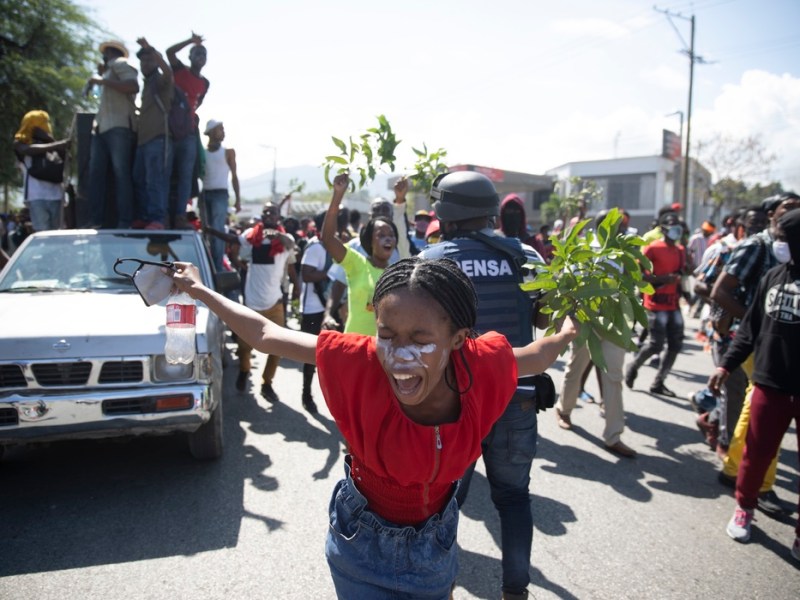
Labor teams, together with CODEVI Ouanaminthe Employees Union ( UTRACO), argue that Haitian regulation requires wages to be adjusted when the price of residing rises considerably — a provision they are saying has not been enforced.
“As said in Article 137 of the labor code, when the price of residing will increase or if inflation goes up not less than 10% in any given 12 months, wage changes should comply with,” stated native union chief Feguens Paul.
Employees say their calls for should not solely financial but additionally about dignity and recognition.
As protests proceed, tensions between employees, unions and industrial park administration are escalating.
Authorities have tried to resume operations at CODEVI, however union leaders say a number of organizers have been dismissed, a transfer they denounce as retaliation.
“These dismissals are supposed to weaken the motion,” stated Roselin Jean, a UTRACO member. “However we are going to proceed with our calls for.”
With no decision in sight, the standoff underscores the widening hole between wages and the price of residing in Haiti — and the rising stress on one of many nation’s most vital financial sectors.
The standoff additionally comes at a fragile second for Haiti’s textile trade, as producers search to reassure worldwide patrons that manufacturing can proceed regardless of the nation’s worsening safety disaster.
U.S. lawmakers and commerce teams supporting HOPE and HELP have repeatedly championed the attire sector as an financial lifeline for Haiti, warning that additional instability may speed up manufacturing unit closures and job losses.
For a lot of employees in Ouanaminthe, nonetheless, the talk over preserving the trade means little if wages can not cowl primary residing bills.
“We’re not asking for luxurious,” Pierre stated throughout the April demonstrations. “We’re asking to outlive.”