
Overview:
As Haitian Short-term Protected Standing (TPS) nears its Feb. 3 expiration, a coalition of immigrant rights teams launched detailed information displaying Haitian TPS holders contribute an estimated $5.9 billion yearly to the U.S. economic system and pay greater than $1.5 billion in taxes. Advocates say the findings underscore the broad financial and social affect of Haitian TPS holders and the dangers of ending the protections.
On the eve of Short-term Protected Standing (TPS) for Haiti set to run out on Feb. 3, researchers and immigrant rights organizations launched probably the most detailed financial information but displaying simply how deeply Haitian TPS holders are woven into the U.S. economic system and communities.
The brand new reality sheet — launched Jan. 27 by FWD.us, UndocuBlack Network, and the Haitian Bridge Alliance — finds that Haitian TPS holders generate an estimated $5.9 billion yearly for the U.S. economic system and contribute greater than $1.5 billion in federal, state and native taxes.
The actual fact sheet additionally studies that about 200,000 Haitian TPS holders are a part of the U.S. workforce, filling very important roles in industries fighting labor shortages. These embrace 15,000 agricultural staff, 13,000 nursing assistants, 8,000 caregivers and plenty of extra in crucial service, transportation and manufacturing sectors.
“TPS is non-negotiable as a result of it’s a lifeline,” mentioned Guerline Jozef, govt director of the Haitian Bridge Alliance.
“We can’t drive folks to return to a burning dwelling,” she added, referring to Haiti’s ongoing gang-plagued violence and related humanitarian crises. “Ending TPS would drive households into unattainable selections, push U.S. citizen kids into poverty and with out dad and mom and ship folks again to circumstances that clearly violate each the regulation and primary human dignity.”
By the numbers: Haitian TPS holders’ financial affect
Along with the $6 billion contributed nationwide, the researchers spotlight the important thing industries counting on Haitian TPS holders: well being care and residential well being care, agriculture and meals manufacturing, transportation and supply providers, hospitality and meals service, and development and upkeep.
Todd Schulte, president of FWD.us, added that revoking TPS protections “is not only merciless; it’s financial self-sabotage” that may weaken communities and strip billions from the U.S. economic system.
On a state-by-state foundation, the researchers discovered notably that:
- Florida, as the house to the most important focus of Haitian TPS holders, about 158,000, had greater than $1.5 billion generated yearly within the Miami metropolitan space alone.
- New York’s Haitian TPS holders, an estimated 40,000, contributed greater than $1.1 billion yearly to the regional economic system, with a powerful presence in dwelling well being care, transportation, meals service and metropolis infrastructure.
- Ohio, one of many newer states with a sudden inflow of Haitians, is dwelling to about 14,000 Haitian TPS holders who contribute $160 million yearly to the state’s economic system.
What’s TPS?
TPS permits folks already residing in the USA to remain and work legally for as much as 18 months if their homelands are unsafe due to civil unrest or pure disasters. Haitians have been first granted TPS after the 2010 earthquake devastated the nation, inflicting many individuals to flee as their properties and livelihoods collapsed.
In the course of the Biden administration, the designation was expanded to cowl folks from greater than a dozen international locations, with the most important numbers being Venezuelans and Haitians – together with those that arrived from different international locations after Haiti’s president was assassinated in 2021.
The standing may be renewed repeatedly, and people who need to stay completely should search different types of immigration reduction, similar to asylum or household reunification, to acquire everlasting residency. Critics say renewal had change into successfully computerized for a lot of immigrants, it doesn’t matter what was occurring of their dwelling nation.
Underneath the second Trump presidency, policymakers have sought to finish it for folks from quite a few international locations. Final November, the administration introduced it might not renew TPS for Haitians, citing the State Division’s indication that there have been “no international coverage considerations” about ending this system. Legal professionals challenged that assertion, declaring that the U.S. has positioned journey to Haiti on the highest stage of alert. Decide Ana C. Reyes is weighing whether or not the federal government adopted correct procedures and totally assessed present circumstances in Haiti earlier than terminating the designation.
Her ruling is due Monday — in the future earlier than the present designation expires.
Kids in danger too
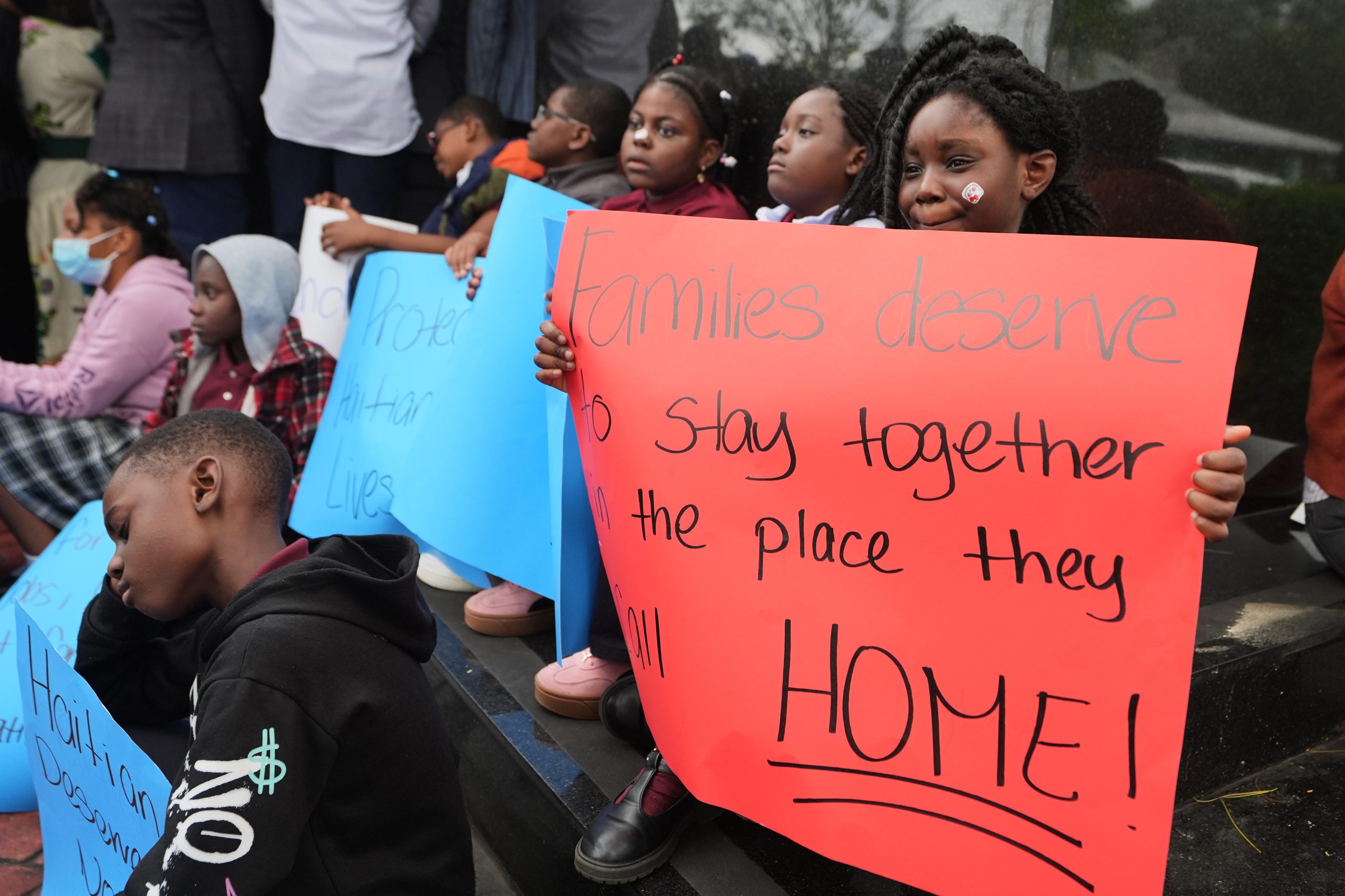
Many within the Haitian group are hoping Reyes rejects the federal government’s discovering. Households with TPS holders are feeling the nervousness and worry of doable lack of employment as early as Feb. 3 and deportations. The just lately launched reality sheet highlights that an estimated 50,000 U.S. citizen kids have no less than one dad or mum with Haitian TPS, and that if protections are terminated, about 25,000 of these kids could possibly be pushed into poverty when their dad and mom lose work authorization.