
Overview:
French authorities in Guadeloupe and French Guiana are grappling with a pointy rise in asylum claims from Haitians whereas persevering with deportations to Cap-Haïtien. Advocates say the twin pressures have overwhelmed native asylum methods, uncovered authorized contradictions and deepened uncertainty for Haitian communities lengthy rooted in France’s abroad territories.
PARIS — Authorities within the French abroad areas of Guadeloupe and French Guiana are deporting Haitians at the same time as asylum claims from the Caribbean territories rise sharply, a convergence that immigrant advocates say is overwhelming native asylum methods and leaving long-established Haitian communities in authorized limbo. In response to La Cimade, a nonprofit that helps migrants, asylum seekers and refugees, officers in a number of French territories are struggling to handle the caseload of Haitian asylum seekers.
The mixture has created administrative bottlenecks and uncertainty for tens of hundreds of Haitians lengthy rooted within the Caribbean territories, the advocates say.
“We see individuals who arrived as youngsters, who constructed households right here, dealing with expulsion due to a declare that’s poorly outlined and poorly supervised,” stated Pauline Râï, who oversees La Cimade’s work in immigration detention in Guadeloupe and French Guiana.
The expulsions mirror a refusal by French authorities to reckon with the dimensions of Haiti’s disaster and the protections it requires, advocates say.
“We have been actually greatly surprised, as a result of it’s not as if there hadn’t been warnings,” stated Lucie Curet, La Cimade’s regional director for the Antilles-Guiana area. “There have been alerts from many associations, calls from the U.N. refugee company to cease removals to Haiti and even a mission by the French asylum workplace.”
Since Jan. 2, the Haitian Nationwide Police has carried out a number of operations towards gang networks, seizing weapons and fight gear in Port-au-Prince, Arcahaie and northern Haiti
La Cimade has repeatedly referred to as for an finish to expulsions to Haiti and for authorities to permit Haitians to pursue asylum claims with out being eliminated earlier than courts have dominated, warning that returns, together with through Cap-Haïtien, expose individuals to critical danger.
In response to consultants, deportations will not be only a native enforcement subject however a part of a wider European shift towards harder immigration insurance policies. Advocates say the result’s a system that concurrently acknowledges Haiti’s excessive violence whereas eradicating individuals who have lived, labored and raised households underneath French jurisdiction for years.
“There’s a large unresolved query about how Haitians who will stay, who can work and entry providers, will combine,” Curet stated. “Proper now, nothing is in place.”
Haitian expulsions ramping up
Advocates say the expulsions, referred to as éloignements in French, restarted simply earlier than summer season 2025.
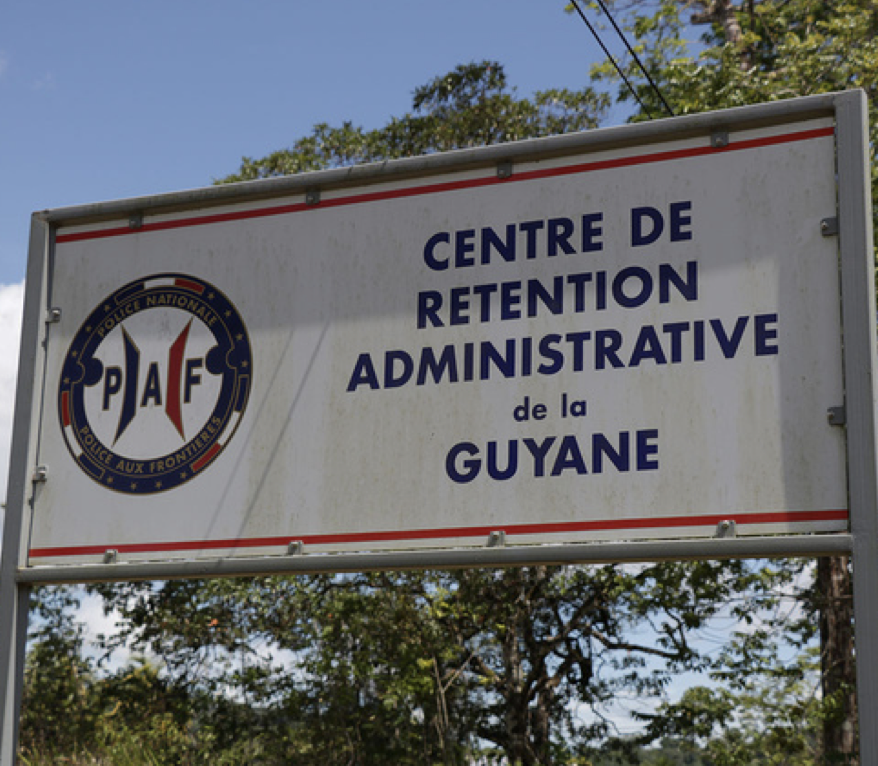
“In French Guiana, 38 Haitians have been detained within the CRA because the starting of 2025,” Râï stated in a December 2025 interview.
The middle’s capability dropped to 12 beds after a fireplace early in 2025, which implies the numbers signify solely a fraction of what authorities used to detain. Nonetheless, she stated 100 individuals have been expelled from French Guiana since summer season 2025.
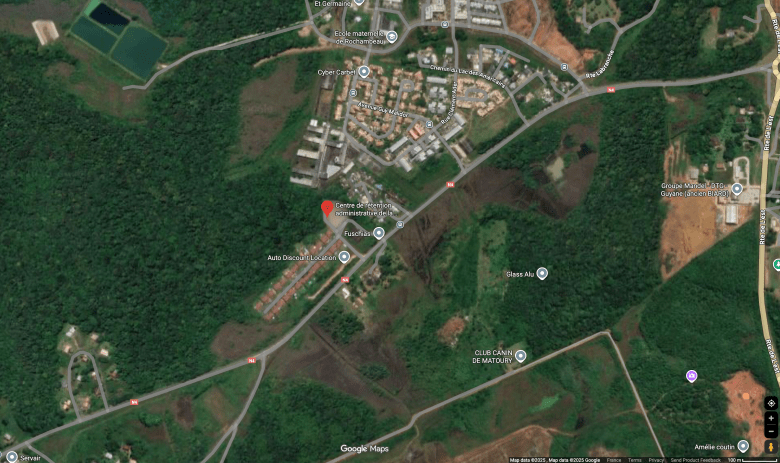
As a result of French Guiana has no direct flights to Haiti, most detainees are transferred to the CRA in Guadeloupe earlier than departure. Guadeloupe, she stated, has expelled 11 Haitians to this point in 2025 out of 52 detained there.
Râï emphasised that selections more and more activate the French authorities’s broad use of menace à l’ordre public, a loosely outlined allegation that somebody threatens public order. As soon as authorities apply that label, she stated, the prospect of avoiding removing drops sharply, even for individuals with deep household ties in France.
Some Haitians are additionally expelled instantly from assignation à résidence, or home arrest. As a result of these removals will not be publicly reported, advocates typically find out about them solely via phrase of mouth.
“We suspect removals are occurring, however prefectures don’t talk,” Râï stated.
Shift in Europe falls on Caribbean territories’ backs
Marie-Laure Basilien-Gainche, a public regulation professor who makes a speciality of asylum and migration insurance policies, stated the resumption of expulsions follows a delicate however important shift on the European degree. Throughout the continent, governments have more and more pushed for harder interpretations of asylum regulation and fewer authorized constraints on deportations, a development that has accelerated as far-right events and hardline coalitions have gained energy and reshaped migration coverage debates.
For years, the European Courtroom of Human Rights issued interim measures, emergency orders utilized in distinctive and pressing conditions, to dam returns to Haiti as a result of danger of inhumane or degrading therapy. In Could, nevertheless, several Council of Europe member states sent a letter urging the courtroom to interpret the safety supplied by Article 3 of the Conference extra flexibly in migration circumstances.
“Is there a causal hyperlink? A coincidence? We don’t know,” Basilien-Gainche stated.
“However since that letter, the courtroom has stopped issuing interim measures stopping returns to Haiti. And the prefectures have been delighted.”
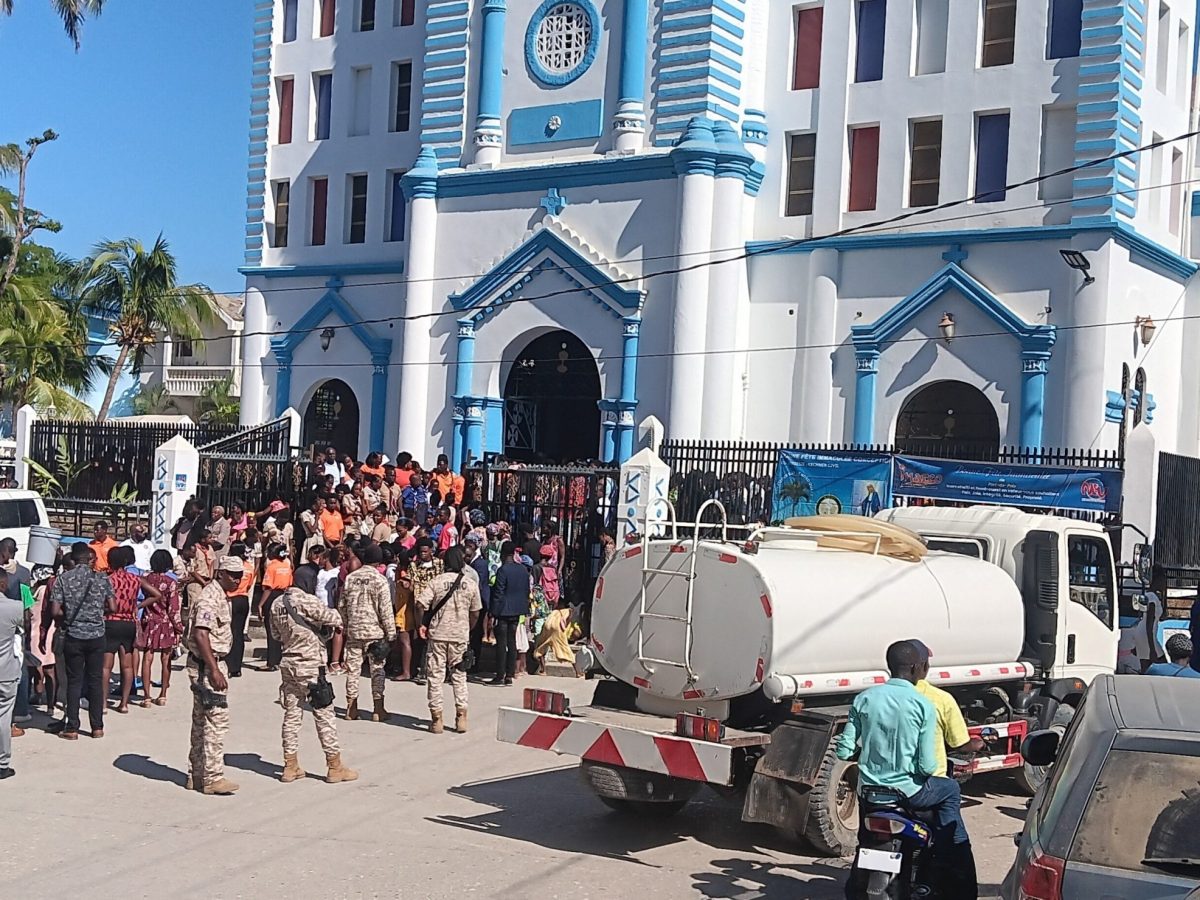
Residents of Port-de-Paix and Saint-Louis-du-Nord report ongoing armed assaults, robberies and sexual assaults as gang violence spreads into provincial cities, threatening end-of-year celebrations amid weak police response
On the similar time, she famous, French asylum judges have acknowledged that Haiti presents a degree of violence whose depth is so excessive that Haitians get hold of subsidiary safety. To reconcile these contradictory positions, authorities have leaned on the thought of inside asylum: they began to ship again Haitians to Cap-Haïtien, a metropolis not explicitly named in asylum rulings as experiencing violence of the identical depth as Port-au-Prince.
“If we have been making use of the regulation actually, administrations must confirm whether or not somebody can actually journey safely from Cap-Haïtien to a different area with out their liberty or safety being threatened by gangs,” Basilien-Gainche stated. “If we’re being real looking, given the scenario in Haiti, you don’t return individuals there.”
She added that French Guiana, like Mayotte, one other French abroad division, operates underneath an exception to a authorized regime that expands police powers and reduces procedural safeguards for migrants, making expulsions simpler to hold out than in mainland France.
The sharp rise in asylum functions from Haitians doesn’t imply extra persons are arriving from Haiti, Curet confused. The surge started after a December 2023 ruling from France’s National Court of Asylum that granted automated subsidiary protection to Haitians from three areas experiencing excessive violence: Port-au-Prince, Artibonite and the Ouest division.
As soon as the phrase unfold, many Haitians already dwelling in Guadeloupe and French Guiana reapplied for asylum, particularly those that have been beforehand denied.
“It’s regular. These are individuals who have been already right here,” Curet stated. “Nevertheless it was not anticipated in any respect by nationwide authorities.”
Haitians in French territories, a primer
Sociologist Jean Eddy Saint Paul, founding director of the CUNY Haitian Studies Institute, says the present scenario can’t be understood with out wanting on the longer historical past of Haitian migration to France’s abroad territories.
“Earlier than the Seventies and Nineteen Eighties, there have been only a few Haitians dwelling within the French abroad departments,” Saint Paul stated, citing the Duvalier dictatorship as one of many first main elements that drew Haitians to these territories.
Geographic proximity and cultural ties, resembling a shared Creole language, made Guadeloupe, Martinique and French Guiana accessible alternate options to the U.S. As U.S. immigration coverage hardened underneath Ronald Reagan’s presidency within the early Nineteen Eighties, these French territories turned extra of another.
Guadeloupe is about 700 miles from Haiti, whereas French Guiana is a brief flight away, making these territories among the many closest European jurisdictions to Haitian shores.
“Firstly, lots of the migrants had accomplished secondary schooling in Haiti and will use French,” Saint Paul stated. “They believed integration can be simpler in a francophone territory.”
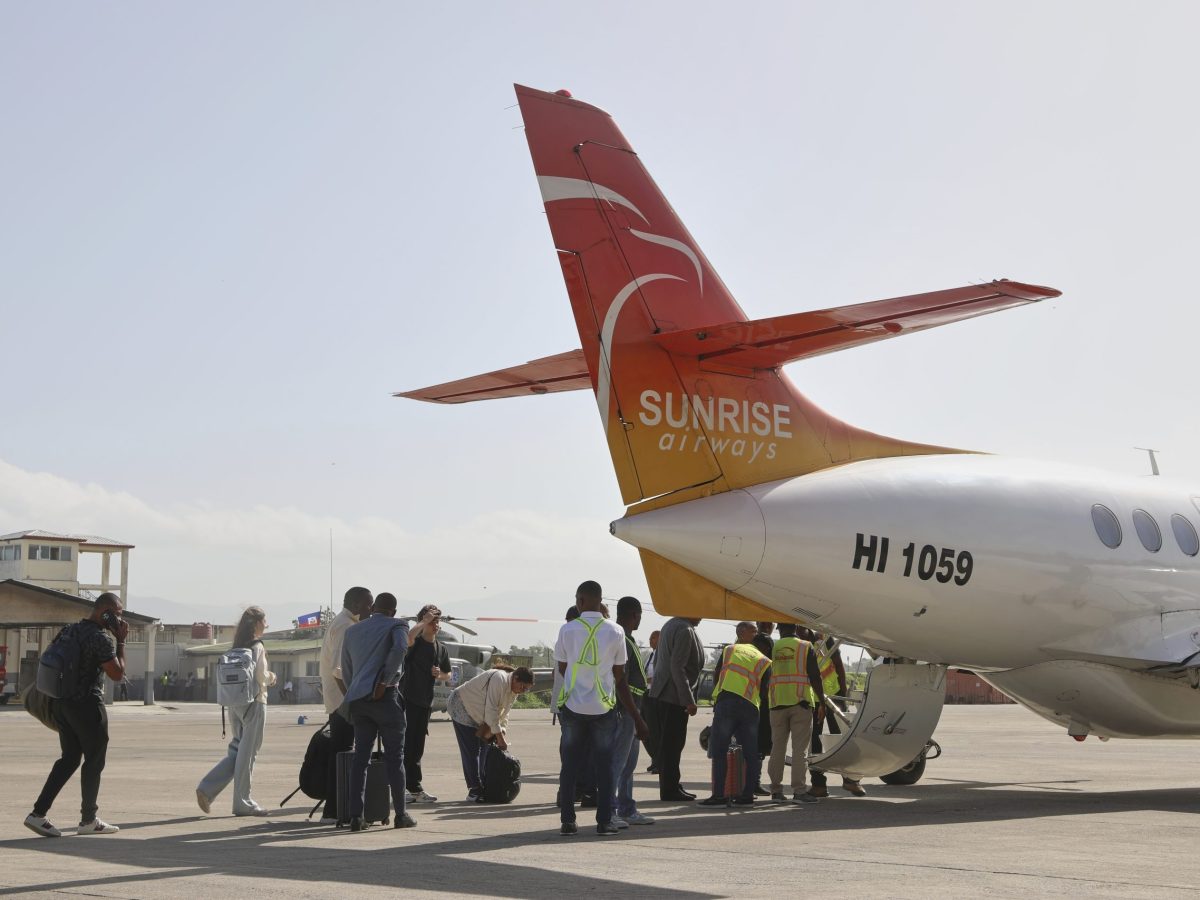
Dawn Airways confirmed the suspension, which follows the FAA’s extension of U.S. business suspension amid worsening gang violence
Throughout the Nineteen Eighties, Haitian konpa musicians and Antillean zouk bands resembling Kassav’ carried out throughout the area, fostering what Saint Paul described as “cultural globalization” that created a way of shared Caribbean tradition.
“These territories have been then seen as much less international,” he stated. “They usually have been calmer, extra secure politically and socially.”
Different waves of immigration adopted political upheavals in Haiti: the 1991 coup that ousted President Jean-Bertrand Aristide, the violence that adopted, and later the 2010 earthquake and its aftermath.
“Throughout these moments, the precedence was not the vacation spot,” Saint Paul stated. “It was leaving.”
Over time, Haitians who settled in French abroad departments constructed social networks and helped family members be a part of them. Haitians within the French abroad territories dwell underneath a variety of authorized statuses. Though the identical citizenship and residency legal guidelines apply as in mainland France, entry to everlasting standing is gradual and conditional, leaving many households, together with these with youngsters born domestically, in lengthy authorized uncertainty.
Backlogged asylum methods go away native Haitian neighborhood in limbo
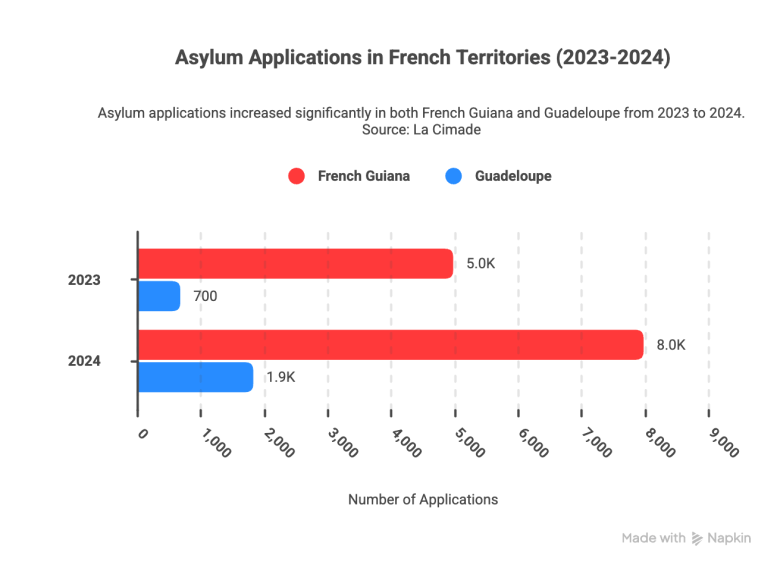
In French Guiana, asylum functions jumped from 5,000 in 2023 to eight,000 in 2024. Requests in Guadeloupe rose from roughly 700 to 1,850. As of October 2025, French Guiana had already recorded 7,500 functions. Total, advocates are saying the development has stabilized however not slowed.
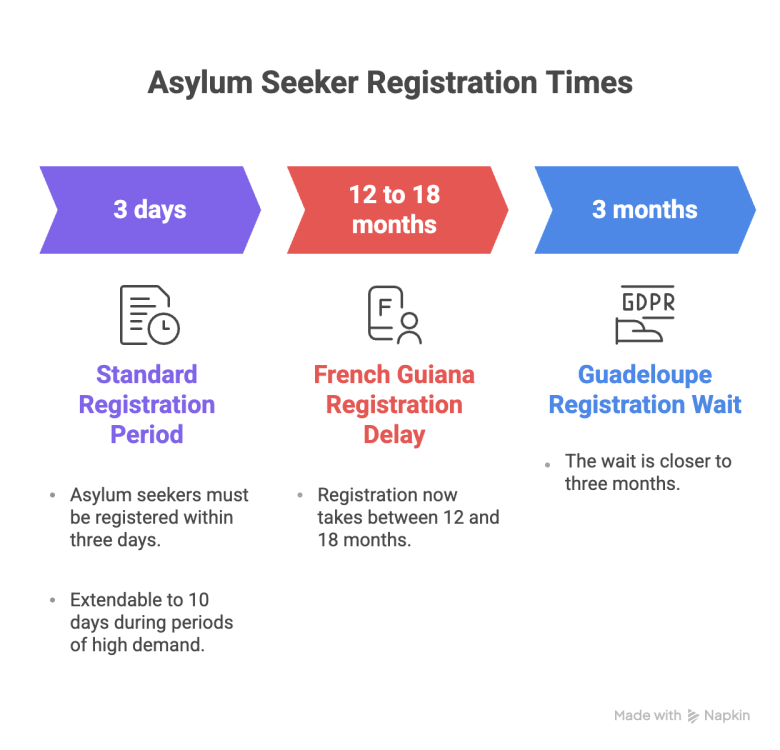
As a result of French authorities did not anticipate the surge, each territories now face unprecedented delays, Curet stated. Below French regulation, asylum seekers have to be registered inside three days, extendable to 10 during times of excessive demand. In French Guiana, nevertheless, registration now takes between 12 and 18 months. In Guadeloupe, the wait is nearer to a few months.
“It’s incomparable to something seen in mainland France,” Curet stated. “French Guiana has at all times been under-resourced, and now it’s the division with the best enhance in Haitian safety wants.”
Though asylum seekers are legally entitled to housing and social assist, Haitians constantly obtain much less of each. Curet stated Haitians are essentially the most represented nationality amongst asylum candidates however profit the least from lodging and social help.
Stereotypes portraying Haitians as naturally resourceful or accustomed to hardship typically form selections by native authorities, she stated. In exchanges with prefectures and repair suppliers, Curet stated advocates repeatedly hear the idea that Haitians can “handle on their very own” or depend on neighborhood assist.
For Haitians who arrived years in the past, that always means persevering with to dwell in the identical precarious situations they confronted earlier than looking for asylum. For more moderen arrivals, casual neighborhood networks might present some assist, however Curet stated these networks are restricted and can’t at all times meet individuals’s wants.
Past the speedy pressure on the asylum system, Curet stated a deeper disaster is rising: the combination of Haitians who are actually receiving safety at excessive charges.
In French Guiana, between 70% and 80% of candidates are granted safety, roughly double the nationwide charge in mainland France. Most Haitians do finally obtain subsidiary safety, a secure authorized standing that features the suitable to work and entry social advantages. But the territory has no long-term housing facilities for individuals who obtain safety and provides solely six months of social assist, far lower than what is accessible in mainland France, in accordance with La Cimade.
“Immediately, there’s this time bomb, this large problem to handle this subject of how these Haitians who’re destined to stay in these territories will then combine them,” stated Curet.